
Wall City Directory Holdings
Wall research depends on county and regional volumes rather than one continuous township run. The earliest located lead is J.H. Lant's 1875 Monmouth County Directory. Boyd's volumes then supply several turn-of-the-century snapshots, while the Farm and Business Directory offers a different view of rural people and enterprises. Later material is spread among microfilm repositories, library shelves, and a regional digital archive. The year and locality heading matter as much as a surname because a volume may group a shore community, postal town, or rural locality differently from modern Wall boundaries.
| Collection | Years | Where Held | Access |
|---|---|---|---|
| J.H. Lant, Monmouth County Directory | 1875 | Repository and microfilm holdings | Consult the holding repository |
| Boyd's Monmouth County directories | 1898-99, 1900-01, 1904-05 | Regional directory repositories | Repository or microfilm research |
| Farm and Business Directory of Monmouth County | 1914 | Regional directory holdings | Repository research |
| NJ Historical Society Monmouth reels | 1885-86, 1891, 1897-1901, 1905-17, 1920-21 | NJ Historical Society microfilm holdings | Repository access |
| Red Bank Public Library DigiFind-It set | 1899; 1938-1981 selected years | Red Bank Public Library digital archive | Free online scans |
| NJ State Library directory collection | Varied | New Jersey State Library collection | Catalog and holdings discovery |
No source establishes a complete Wall-only series across those years. Treat each volume as a dated lead, preserve its spelling, and record the repository alongside the citation. A missing name can reflect the volume's scope, its locality label, or an unscanned year, not a proven absence from Wall.
Wall City Directories Online
The digitized Red Bank collection is a useful regional shelf when a search reaches the coast-side communities around Wall. Its directory category lists people, businesses, and institutions with locations, and its landing page exposes a year or item selection leading to individual scans. The inspected collection lists 23 items, including 1899 and selected years from 1938 through 1981. It does not turn every regional listing into a Wall record, so read the locality heading before assigning a result to the township.
The Red Bank Public Library DigiFind-It directory collection provides the year list and scan entry points used for this regional search.
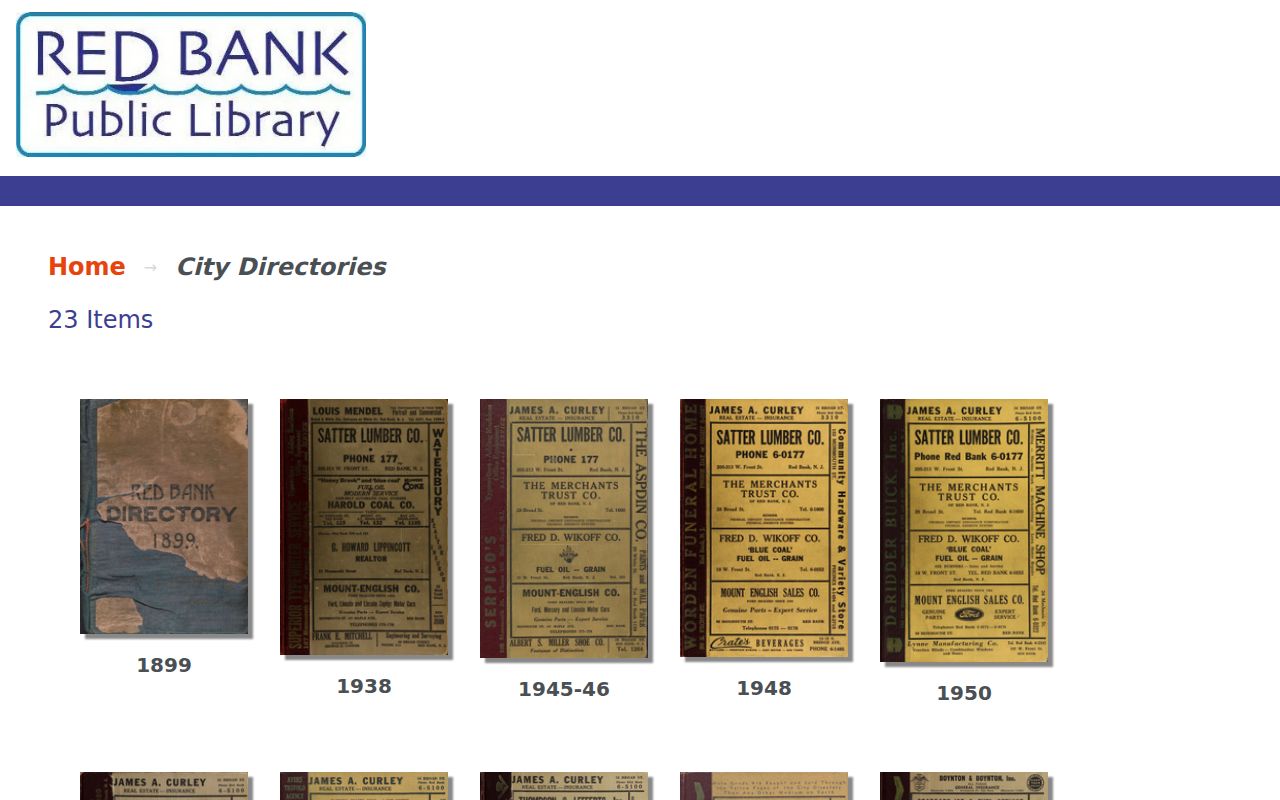
Use the displayed item year as part of every note. The text-only inspection did not expose a full printed entry or OCR, so an actual scan must be read before transcribing a name, street, occupation, spouse, owner notation, or renter notation.
Wall Directory Research Rooms
When a desired year is not online, the Monmouth County Library Historical Room is the first practical shelf. Established in 1998, it contains more than 1,400 books, magazines, directories, and scrapbooks. Materials are primarily non-circulating and used in the secured room with reference-librarian help. The Wall branch can supply public computers, Wi-Fi, scanning, printing, and copies, then direct deeper local-history work to Headquarters in Manalapan.
County Library Historical Room
Historical Room holdings include directories, scrapbooks, periodicals, and local-history subjects. Use the catalog and ask staff about in-library access.
MCHA Research Library
MCHA's appointment-only Research Library & Archives in Freehold holds county and city directories, tax ratables, census material, obituaries, and manuscript collections.
MCHA also offers a defined alternative to free indexes: its guidance lists a $10 small specific search for up to five digital or printed records and $35 per hour for broader genealogy, with a quote when more than an hour is expected. Ask first whether the requested year, locality, or surname appears in its catalog or finding aids.
Note: Library database access varies, and Ancestry Library Edition is identified as in-library only by the county system.
Wall Directory Reels by Year
The New Jersey Historical Society lists a ten-roll Monmouth directory run that reaches beyond the isolated county volumes. Its holdings include 1885-86, 1891, 1897-1901, 1905-17, and 1920-21, as well as Monmouth city directories for 1875, 1898-99, and 1904-05. These are holdings leads, not a promise that every printed page names a Wall resident. The title page, coverage statement, and locality arrangement decide whether a reel answers the question.
The New Jersey Historical Society microfilm listing is the repository guide for the Monmouth runs.
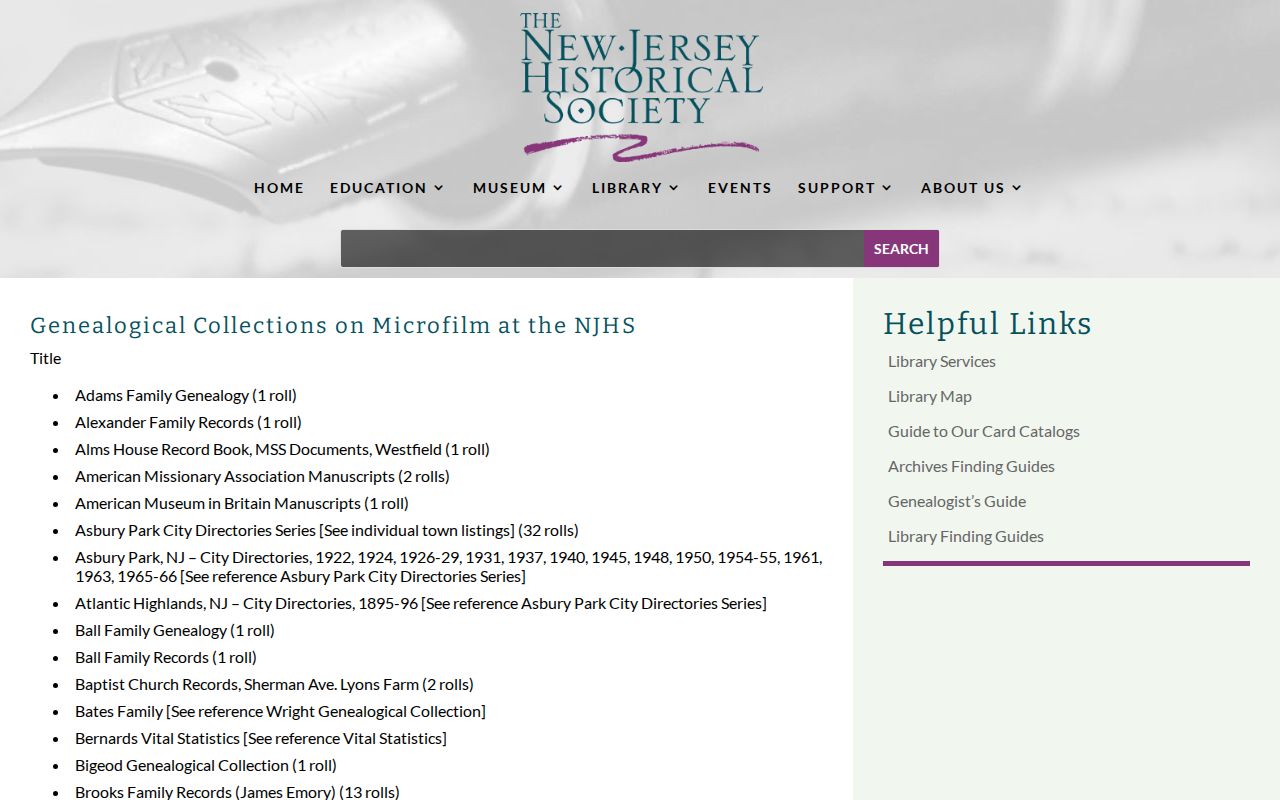
The reel listing helps identify a plausible year before a trip or request. It does not replace checking the volume itself for printed locality and street context.
- 1875: J.H. Lant provides the earliest located county-directory lead.
- 1898-1905: Boyd's volumes create several closely spaced county snapshots.
- 1914: The Farm and Business Directory adds rural and enterprise context.
- 1920-21: The listed NJ Historical Society run extends the documented microfilm sequence.
Decode Wall City Directory Entries
A directory entry is a historical pointer, not a standardized resident record. The verified digital collection describes its directory material at the category level, but the inspected text view did not expose a Wall or Monmouth entry line by line. That limitation is useful: transcribe only what the open scan actually shows, and never fill in an expected occupation, spouse, address, owner mark, or renter mark from a later volume or another family.
| Year and repository | Record the volume year, archive, item title, and scan or page reference when visible. |
|---|---|
| Printed name | Copy spelling and initials exactly; do not silently modernize a surname. |
| Locality or street heading | Read it before treating the entry as Wall, since regional directories can organize nearby places separately. |
| Location category | The archive verifies people, businesses, and institutions with locations, but the specific line determines the relationship. |
| Other line fields | Occupation, spouse, address, owner, and renter details must come from the actual scan. None was verified in the text-only inspection. |
- Criss-cross directory
- A street-ordered directory format, if a particular volume includes one. The inspected collection did not establish a Wall or Monmouth criss-cross run.
- Householder index
- An index intended to lead to a listed household. Check the volume's contents before assuming it has this feature.
- Abbreviation key
- A legend explaining shorthand used by that publisher. Photograph or transcribe it only when it appears in the volume.
Wall Directory, Census, Deed Clocks
One surname can surface in three records that answer different questions. A directory supplies a dated listing. A census gives household structure for its enumeration. A deed records a property-interest transfer. Putting all three on one timeline avoids converting a subscriber, an owner, or a listed business contact into an unproven occupant. For Wall history, the county's 1875 census search and the state and federal census layers are useful checks between directory years.
| Record | Best use | Limit to retain |
|---|---|---|
| Directory | Dated person, business, institution, or locality lead | Its exact line and heading control what it proves |
| Census | Household structure at an enumeration point | It is a time slice, not a yearly address roll |
| Deed or tax record | Recorded property relationship or owner-of-record clue | Ownership does not by itself prove residence |
The comparison matters when a locality name changes. Keep Wall, Allenwood, Glendola, West Belmar, Manasquan Park, and Sea Girt Estates as possible historical search terms rather than forcing every citation into a modern postal label.
Wall Estate Records Beside Directories
Older directories gain depth when a surname also appears in estate material. The Monmouth County Archives estate collection spans 1739-1924 and documents 179 intestate individuals, with most material from 1807-1844. Its files can include inventories, vendue lists, creditors, appraisals, taxes, business account books, letters, deeds, and judgments. Those records may name a deceased person, an administrator, or a purchaser, so the role must be labeled rather than treated as a household listing.
The Monmouth County Archives estate-record finding aid identifies the collection's dates, arrangement, and scope. MCHA and the New Jersey State Archives provide other routes for wills, deeds, census material, and historical maps when a directory year alone leaves an address unresolved.
Trace Wall Families Through Directories
Begin with a confirmed surname, address, street fragment, or local business and make a separate row for every year checked. Preserve the locality spelling in that row. The trail then becomes easier to test against the Monmouth 1875 census search, later census material, tax ratables, deed indexes, obituary indexes, and newspapers. A later current-name question can be separated from this historical work with a Wall resident lookup.
- Choose the earliest likely volume and note the printed locality before copying a name.
- Check the next documented directory year, keeping exact spellings and any visible street or business wording.
- Pair the result with the closest applicable census layer to test household composition.
- Use a deed, tax ratable, or map when the question concerns a property relationship rather than a listing.
- Consult obituary or cemetery resources when a person disappears from the available directory sequence.
Disappearance from a volume only establishes that the person was not found in that publication. A move, death, omission, locality change, or a gap in the surviving set can all produce the same result. Record the source and then seek a second dated record before drawing a family-history conclusion.
Note: Historical listings should be cited by year and repository because nearby postal and township names can point to different record arrangements.