
Wall Previous Residents by Era
One address can be researched backward only when the source changes with the period. Start at the current parcel record, because it supplies the block and lot that tie a modern street address to older deeds. Then move through the county's recorded documents, historical directory leads, census layers, and estate material. Each source shows a different relationship. A deed shows a recorded property interest, a directory supplies a dated listing, and a census adds household context. Keeping those roles separate prevents an owner, an administrator, or a listed business contact from being labeled an occupant without support.
| Source | Years It Covers | Where Held | What It Shows |
|---|---|---|---|
| Wall tax-list books and parcel route | Current | Wall Tax Assessor and county property search | Owner of record, mailing address, situs, assessment, block and lot |
| Monmouth Clerk OPRS deeds | 1970-present online notice | Monmouth County Clerk OPRS | Recorded transfer parties, instrument, book/page, document type, and date |
| County Clerk counter, microfilm, and archives | Before online cutoff | Freehold and archival routes | Earlier deed-chain alternatives |
| Monmouth County Archives census search | 1875 | County Archives online search | State-census research lead |
| New Jersey state censuses | 1855-1915 | Archives and library research routes | Household context at an enumeration |
| Monmouth estate records | 1739-1924 | Monmouth County Archives | Estate and family-context material |
For an older address, use the property description and locality alongside the number. The documented directory leads begin with 1875, then include Boyd's runs, the 1914 Farm and Business Directory, the NJ Historical Society reels, and later digitized regional volumes. They support the household question only after the individual volume is read.
Wall Address Starts with Parcel
Wall's Tax Assessor keeps current ownership records for more than 11,200 parcels. Its in-person tax-list books show owner of record, mailing address, property location, and assessed value, while tax maps and recent sales add property context. The county OPRS/MOD-IV route offers address, owner, block-and-lot, and map modes. Use Wall as the township, not a postal city alone, then write down the block and lot before moving to deed records.
An owner name is not proof of occupancy. The mailing address may be outside Wall, and the situs is the property location. Those two fields can disagree without being an error. The parcel key is more durable than a street-number search when a deed refers to a road, tract, subdivision, or older locality wording.
Wall's Tax Assessor identifies the in-person tax-list route, while the Monmouth property search provides the county's address, owner, block/lot, and map modes.
Note: Preserve the situs, mailing address, block, lot, municipality, and postal wording as separate fields during a Wall address history search.
Trace Wall Deed Chain Backward
After the parcel is identified, Monmouth County Clerk OPRS supplies the recorded-document route. A search can use municipality and document type with a date range, block and lot, a grantor or grantee name, or an exact instrument, book, and page reference. The latest deed often names the prior party needed for the next search. Record the search mode, exact spelling, date window, document type, municipality, and the result's identifier so the next step can be repeated.
The Monmouth County Clerk OPRS deed index is the official online entry point for these search paths.
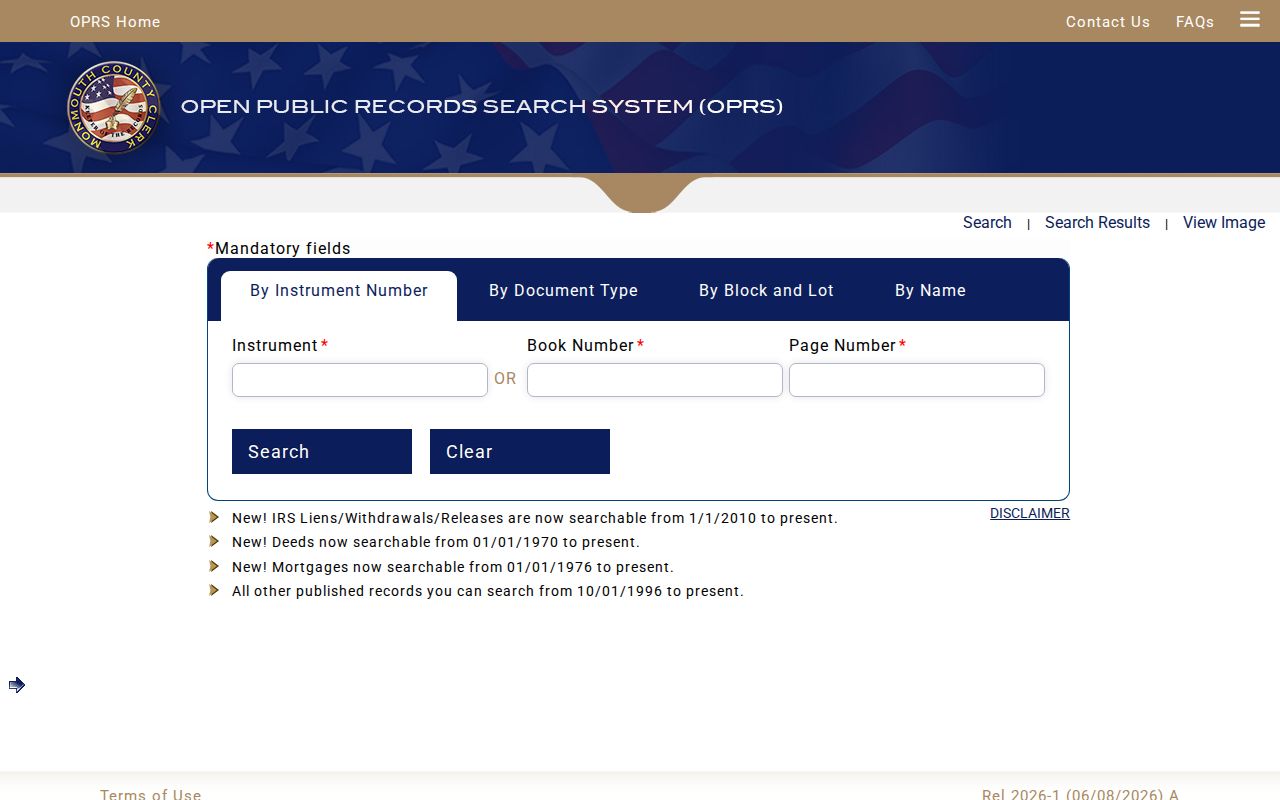
Use the image view when it is available, then distinguish the recording date from any event date visible in the document. The online result is informational and should not be presented as a title opinion.
- Find the current Wall parcel and record its block, lot, situs, and owner-of-record fields.
- Search the parcel or owner in OPRS to identify the newest deed and its instrument or book/page reference.
- Open the available image and extract the prior grantor, grantee, legal description, and recording date only when shown.
- Search the prior grantor as a grantee in an earlier record, repeating the process one transfer at a time.
- Stop at the online cutoff and move to the county counter, microfilm, Archives, State Archives, or FamilySearch for older books.
- Grantor and grantee
- The grantor transfers the recorded interest; the grantee receives that interest.
- Chain of title
- The sequence of recorded transfers used to follow an interest in a parcel backward.
- Legal description
- The property description in a deed, often using tract, road, subdivision, or parcel language instead of a modern street number.
Wall Previous Residents Before 1970
OPRS posts an online deed notice beginning in 1970. Mortgages begin in 1976, IRS liens and related releases in 2010, and other published records in 1996. Those dates describe the online search notice, not the whole life of Monmouth records. Once a prior transfer falls before the deed notice, the reliable next move is the Clerk's in-person title-search counter, county microfilm, the Archives, the New Jersey State Archives, or FamilySearch county deed books.
The Clerk directs title work to an in-person search in Freehold because online data is informational. Its deed-copy procedure also permits in-person or letter/email requests using details such as owner name, property address, block/lot, and book/page or instrument number. The county warns against overpriced deed-copy solicitations, so use the Clerk's official contact route.
MCHA's house-research and historic-map resource links point to additional places to test older parcel descriptions, maps, aerials, and local history.
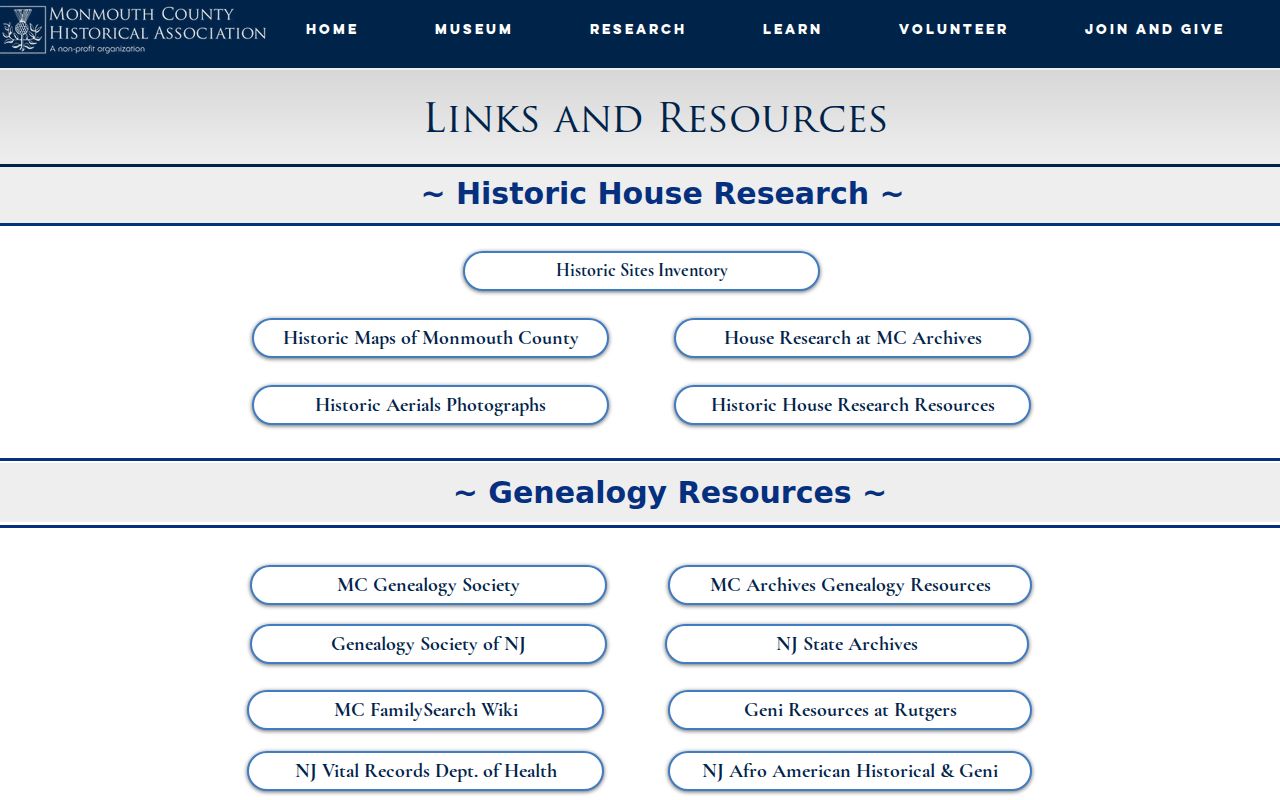
House research can clarify the place named in an older document, but it does not turn an archival address clue into proof of who lived there. Pair it with a dated household source.
Wall Place Names in Older Records
Wall has a dense local vocabulary that can break a literal address search. Official documents name Allaire, Allenwood, Glendola, New Bedford, Shark River, West Belmar, and many other localities. An old deed, directory, newspaper, or tax record may use one of those place names, a nearby post office, or a former boundary rather than the current township form. Allaire deserves special care because it can be a place, road, or name reference.
When a house number fails, search the street name, block and lot, legal description, historic map, and adjacent owners. The research did not locate a comprehensive Wall street-renumbering log or a complete address-change table, so do not assume a present number has a documented direct predecessor. The assessor or tax-map custodian is the practical municipal fallback.
| Evidence | What it connects | What it cannot prove alone |
|---|---|---|
| Deed | Recorded property-interest transfer and legal description | That either named party lived at the parcel |
| Directory | A dated person, business, institution, or locality listing | Continuous residence between editions |
| Census | Household context at an enumeration | Ownership of the named property |
This comparison is the key safeguard for past residents research: date and source role must travel with every name.
Pair Wall Past Residents with Census
Use directories and censuses as paired time points, not as substitutes for each other. Monmouth's 1875 state census has a County Archives search, and New Jersey state censuses run from 1855 through 1915, with 1915 the last. Federal and state materials can add family structure around a directory year, while newspapers, obituary indexes, tax ratables, and deeds supply other dates. The full directory holdings are described on the Wall city directory collections page.
The Monmouth County Archives 1875 Census Information search is the official route for that local state-census lead.
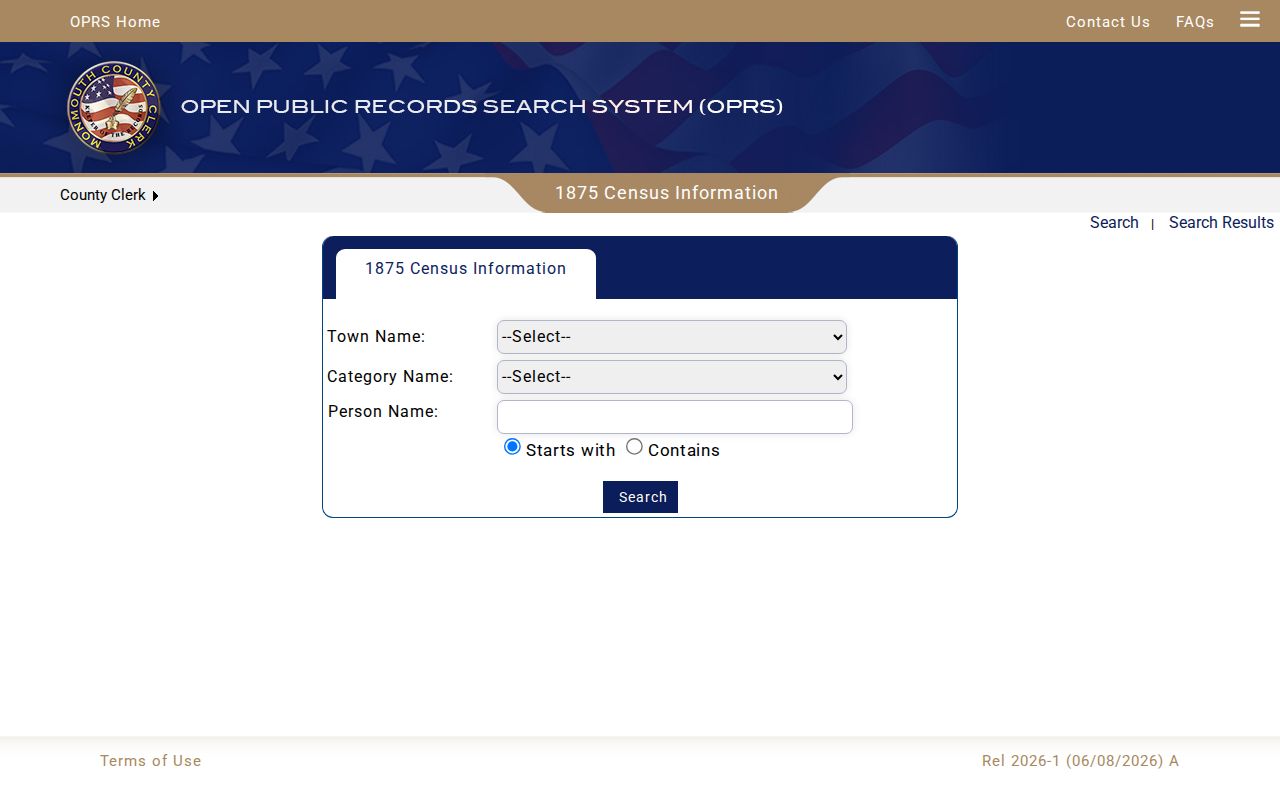
The census search is a household clue for its own period. Match its names and locality carefully to the directory year and property evidence instead of assuming a shared surname identifies the same person.
- Set a directory year or deed date as the first known point for the address or surname.
- Choose the nearest applicable census layer and record its enumeration date separately.
- Compare name spelling, locality, household structure, and any stated address or route without forcing a match.
- Use an obituary, tax ratable, deed, or map to bridge a gap before concluding that a household moved.
Wall Estate Records After a Move
Estate material can close or widen a historical trail after a directory listing ends. Monmouth County Archives holds estate records from 1739 through 1924, including receipts, inventories, vendue lists, creditors, appraisals, taxes, business account books, letters, deeds, and judgments. The collection includes 179 intestate individuals, with most of its material dated 1807-1844. It can place a person in a family or local economic context, but it may also name an administrator, purchaser, creditor, or deceased person rather than a resident.
The Monmouth Surrogate Index is a separate online estate route for 1991-present. Its own notice says it is an index and not all public records, while older estate material requires the Surrogate or Archives paths.
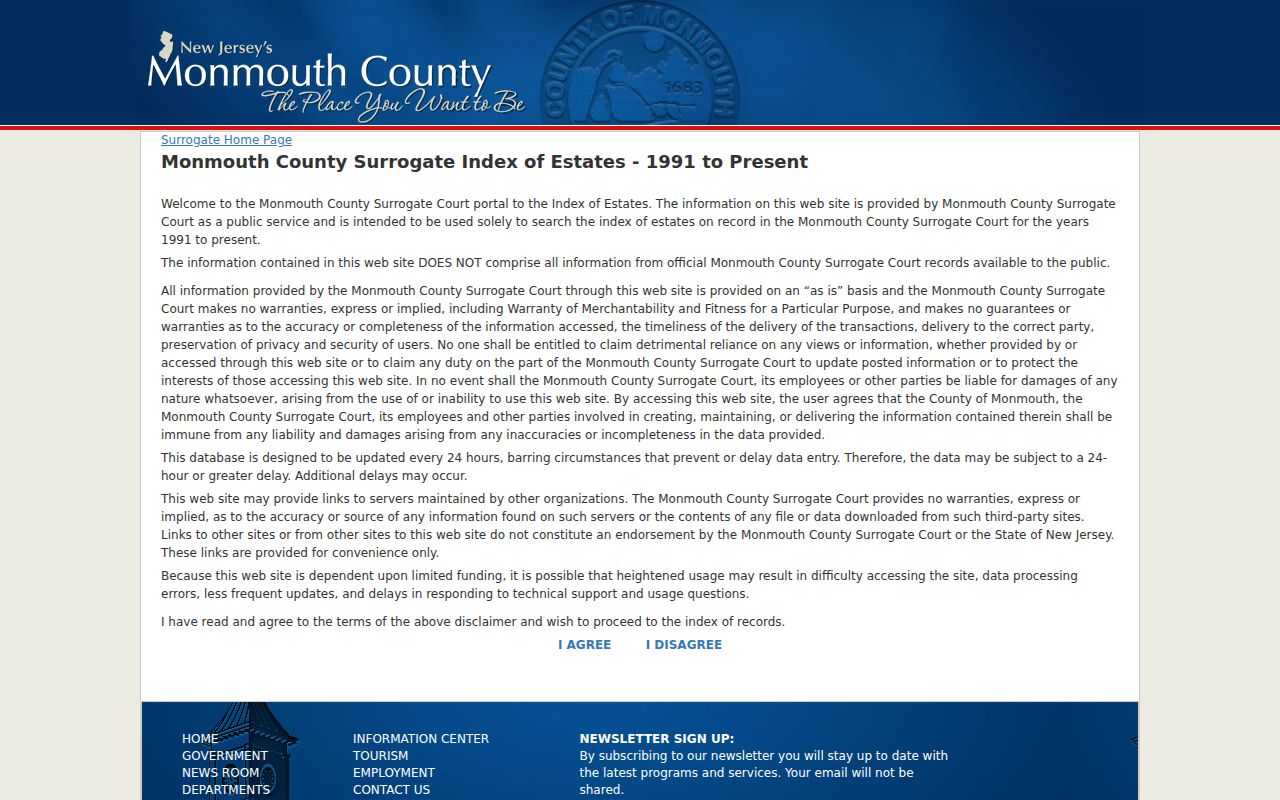
Use an estate index as a lead to the record custodian and record the index result separately from the underlying file. That distinction protects the date trail from unsupported assumptions.
Compare Evidence on Wall Previous Residents
Past residents research works best as a dated chain: address to parcel, parcel to deed, deed party to a historical listing or census, then a newspaper, obituary, or estate source if needed. Each result should carry its source, date, locality wording, and relationship label. A property owner, tax mailing contact, directory subscriber, voter, and estate administrator may all be different people. A blank or missing result can also reflect redaction, an incomplete run, an alias, or a source outside its coverage.
Lawful use. Wall house-history and family-history research should be used for personal, lawful purposes. Do not use a historical or current record to stalk, harass, or harm any person.
Note: When a source conflicts with an address history, preserve both citations and seek the record custodian or a second dated source before resolving it.